

Sitemap
A list of all the posts and pages found on the site. For you robots out there, there is an XML version available for digesting as well.
Pages
Posts
Future Blog Post
Published:
This post will show up by default. To disable scheduling of future posts, edit config.yml and set future: false.
Blog Post number 4
Published:
This is a sample blog post. Lorem ipsum I can’t remember the rest of lorem ipsum and don’t have an internet connection right now. Testing testing testing this blog post. Blog posts are cool.
Blog Post number 3
Published:
This is a sample blog post. Lorem ipsum I can’t remember the rest of lorem ipsum and don’t have an internet connection right now. Testing testing testing this blog post. Blog posts are cool.
Blog Post number 2
Published:
This is a sample blog post. Lorem ipsum I can’t remember the rest of lorem ipsum and don’t have an internet connection right now. Testing testing testing this blog post. Blog posts are cool.
Blog Post number 1
Published:
This is a sample blog post. Lorem ipsum I can’t remember the rest of lorem ipsum and don’t have an internet connection right now. Testing testing testing this blog post. Blog posts are cool.
datasets
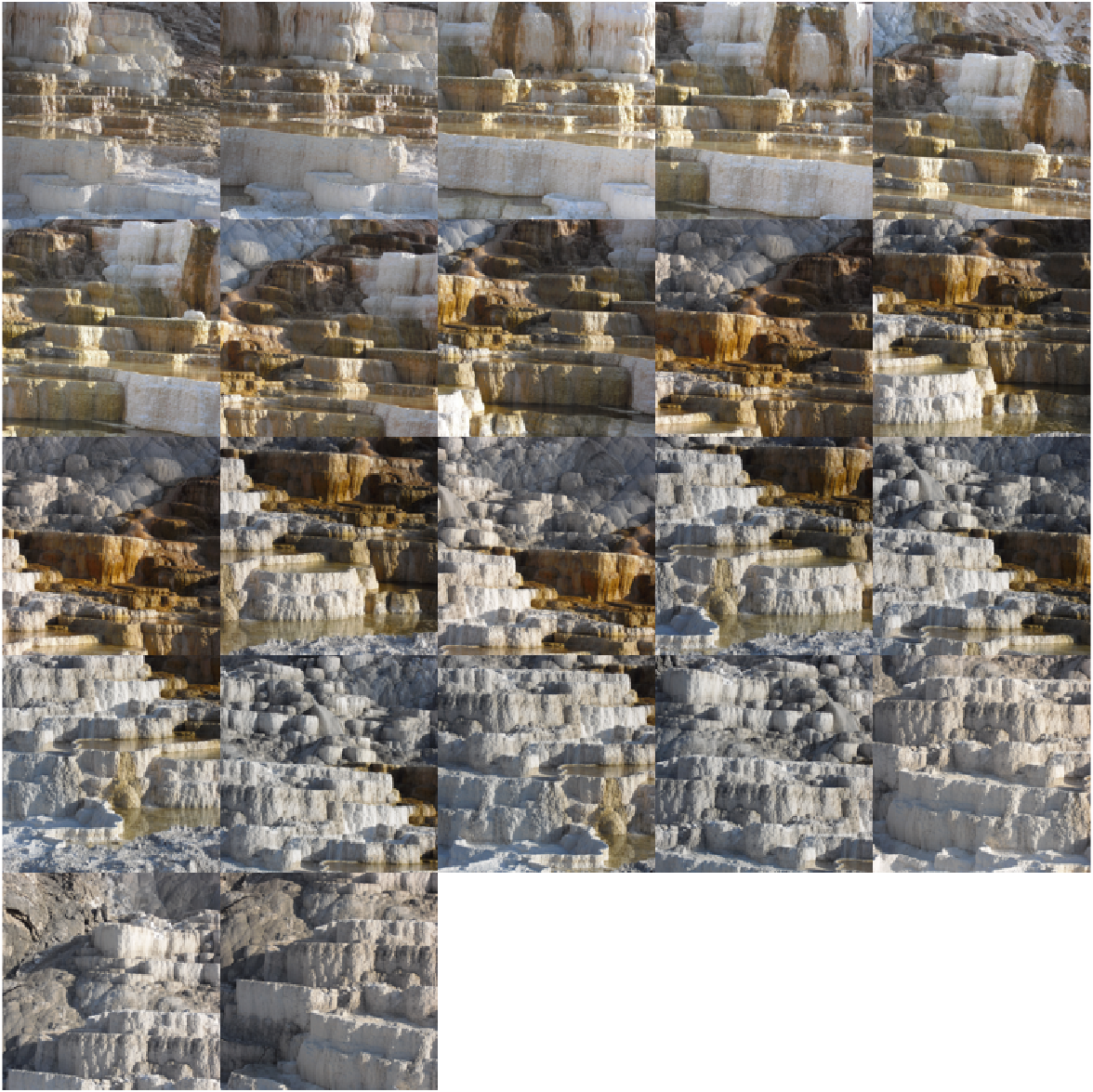
Texture Classification (Textures-97.1K)
Published:

Cracks Classification
Published:
_crack.png)
Cracks Semantic Segmentation
Published:
_crack.png)
portfolio
Portfolio item number 1
Short description of portfolio item number 1
Portfolio item number 2
Short description of portfolio item number 2
publications
Homogenization procedures for the constitutive material modeling and analysis of aperiodic micro-structures
Published in University of Southern California, 2012
Composite materials are the well-known substitutes for traditional metals in various industries because of their micro-structural character. Micro-structures provide a high strength-to-weight ratio, which makes them suitable for manufacturing large variety of applications ranging from simple toys to complicated space/aircraft structures. Since, these materials are widely used in high performance structures, their stress/thermal analysis issues are of major concern. Due to the high degree of material heterogeneity, it is extremely difficult to analyze such structures. Homogenization (rigorous averaging) is a process that overcomes the difficulty of modeling each micro-structure. It replaces an individual micro-structure by an equivalent material model representation (unit cell). Periodic micro-structures appear in regular intervals throughout the domain, in contrast aperiodic micro-structures follows an irregular pattern. Further, this method bridges the analysis gap between micro and macro domain of the structures. In this thesis, Homogenization procedure based on anti-periodic displacement fields for aperiodic micro-structures and aperiodic boundary conditions are considered to model the constitutive material matrix. This work could be easily implemented with the traditional finite element packages. In addition, it eventually increases the convergence accuracy and reduces the high computational expenses. Different problems are analyzed by the implementation of digital image processing schemes for the extraction of a unit cell around the Gauss quadrature points and the mesh-generation. In the future, this research defines a new path for the analysis of any random heterogeneous materials by its ease of implementation and the state-of-the-art micro-structure material modeling capabilities and digital image based micro-meshing.
Recommended citation: Aghalaya Manjunatha, Preetham. "Homogenization procedures for the constitutive material modeling and analysis of aperiodic micro-structures." Ph. D. Thesis (2012).
Download Paper | Download Bibtex
Inexpensive Multimodal Sensor Fusion System for Autonomous Data Acquisition of Road Surface Conditions
Published in IEEE Sensors Journal, 2016
This paper presents the development, evaluation, calibration, and field application of a novel, relatively inexpensive, vision-based sensor system employing commercially available off-the-shelf devices, for enabling the autonomous data acquisition of road surface conditions. Detailed evaluations and enhancements of a variety of technical approaches and algorithms for overcoming vision-based measurement distortions induced by the motion of the monitoring platform were conducted. It is shown that the proposed multi-sensor system, by capitalizing on powerful data-fusion approaches of the type developed in this paper, can provide a robust cost-effective road surface monitoring system with sufficient accuracy to satisfy typical maintenance needs, in regard to the detection, localization, and quantification of potholes and similar qualitative deterioration features where the measurements are acquired via a vehicle moving at normal speeds on typical city streets. The proposed system is ideal to be used for crowdsourcing where several vehicles would be equipped with this cost-effective system for more frequent data collection of road surfaces. Suggestions for future research needs to enhance the capabilities of the proposed system are included.
Recommended citation: Chen, Yulu Luke, Mohammad R. Jahanshahi, Preetham Manjunatha, WeiPhang Gan, Mohamed Abdelbarr, Sami F. Masri, Burcin Becerik-Gerber, and John P. Caffrey. "Inexpensive multimodal sensor fusion system for autonomous data acquisition of road surface conditions." IEEE Sensors Journal 16, no. 21 (2016): 7731-7743.
Download Paper | Download Bibtex
Toward a Swarm of Inexpensive Multimodal Sensor Systems for Autonomous and Quantitative Condition Assessment of Roads
Published in Transportation Research Board 97th Annual Meeting, 2018
Current manual road condition assessment procedures are time consuming and laborious. On the other hand, state-of-the-art commercial data collection approaches are expensive although the data analysis tasks are not fully automated. Due to these limitations, a section of a road is assessed once a year or once every two years. Since insufficient inspection is an important contributor to the poor condition of roads, this study presents the development, evaluation, and field application of a novel, relatively inexpensive, vision-based sensor system employing commercially available off-the-shelf devices that can be mounted on several vehicles and hence collect data from a section of the road more often. In addition, an approach is proposed to interpret the data, and detect, quantify and localize defects autonomously. The proposed hardware-software package system is ideal to be used for crowdsourcing as a complement to the existing commercial road assessment vehicles and reduce the operation cost.
Recommended citation: Chen, Yulu, Mohammad R. Jahanshahi, Preetham Manjunatha, Sami F. Masri, and Burcin Becerik-Gerber. Toward a Swarm of Inexpensive Multimodal Sensor Systems for Autonomous and Quantitative Condition Assessment of Roads. No. 18-03394. 2018.
Download Paper | Download Bibtex
A Two-Stage Local Positioning Method With Misalignment Calibration for Robotic Structural Monitoring of Buildings
Published in ASME, Journal of Dynamic Systems, 2019
In structural health monitoring (SHM) applications carried out by mobile robots, the precise locating of the SHM robot is essential for accurate detection and quantification of defects. The traditional dead reckoning (DR) approach can only provide local position in the horizon, which is not enough for SHM applications in three dimensions in large buildings. In this paper, a new robot positioning algorithm for active building structural defect detection and localization is proposed. The two-stage robot positioning scheme is designed through the self-misalignment calibration and the positioning during SHM task stages, fusing the absolute and relative measurements. In order to overcome the drawback of the DR algorithm, in the full analysis of existing localization mode that can be applied to mobile robots, this paper adopted the inertial navigation system (INS) approach to measure the absolute motion information of a moving robot. On this basis, through the transformation between the absolute positioning coordinates and the local positioning coordinates of buildings, the mobile robot’s optimal trajectory on building surface was designed for self-calibration of coordinate misalignments. The proposed method could effectively achieve the robot local positioning in building coordinate frame by fusing the external relative assistant measurements with absolute measurement. By using the designed strategies, the coordinate misalignment can also be self-calibrated effectively, improving local positioning accuracy.
Recommended citation: Wang, Rong, Zhi Xiong, Yulu Luke Chen, Preetham Manjunatha, and Sami F. Masri. "A Two-Stage Local Positioning Method With Misalignment Calibration for Robotic Structural Monitoring of Buildings." Journal of Dynamic Systems, Measurement, and Control 141, no. 6 (2019): 061014.
Download Paper | Download Bibtex
Vision-based and data-driven analytical and experimental studies into condition assessment and change detection of evolving civil, mechanical and aerospace infrastructures
Published in University of Southern California, 2021
Civil, mechanical, and aerospace infrastructures are subjected to applied loads and environmental forces like earthquakes, wind, and water waves in their operating lifespan. These factors will slowly deteriorate the structures during their service period, and often subtle observations of substantial damages are challenging. Due to the cost-effectiveness of highresolution color, depth cameras, location sensors, and Micro Aerial Vehicles (MAVs), image processing, computer vision, and robotics techniques are gaining interest in Non-Destructive Testing (NDT) and condition assessment of infrastructures. In this study, several promising vision-based and data-driven, automated, and semi-automated condition assessment techniques are proposed and evaluated to detect and quantify a class of problems under the umbrella of infrastructure condition assessment.
Recommended citation: Manjunatha, Preetham Aghalaya. "Vision-based and data-driven analytical and experimental studies into condition assessment and change detection of evolving civil, mechanical and aerospace infrastructures." PhD diss., University of Southern California, 2022.
Download Paper | Download Bibtex
CrackDenseLinkNet: a deep convolutional neural network for semantic segmentation of cracks on concrete surface images
Published in Sage, Structural Health Monitoring, 2023
Cracks are the defects formed by cyclic loading, fatigue, shrinkage, creep, and so on. In addition, they represent the deterioration of the structures over some time. Therefore, it is essential to detect and classify them according to the condition grade at the early stages to prevent the collapse of structures. Deep learning-based semantic segmentation convolutional neural network (CNN) has millions of learnable parameters. However, depending on the complexity of the CNN, it takes hours to days to train the network fully. In this study, an encoder network DenseNet and modified LinkNet with five upsampling blocks were used as a decoder network. The proposed network is referred to as the “CrackDenseLinkNet” in this work. CrackDenseLinkNet has 19.15 million trainable parameters, although the input image size is 512 × 512 and has a deeper encoder. CrackDenseLinkNet and four other state-of-the-art (SOTA) methods were evaluated on three public and one private datasets. The proposed CNN, CrackDenseLinkNet, outperformed the best SOTA method, CrackSegNet, by 2.2% of F1-score on average across the four datasets. Lastly, a crack profile analysis demonstrated that the CrackDenseLinkNet has lesser variance in relative errors for the crack width, length, and area categories against the ground-truth data. The code and datasets can be downloaded at https://github.com/preethamam/CrackDenseLinkNet-DeepLearning-CrackSegmentation.
Recommended citation: Manjunatha, Preetham, Sami F. Masri, Aiichiro Nakano, and Landon Carter Wellford. "CrackDenseLinkNet: a deep convolutional neural network for semantic segmentation of cracks on concrete surface images." Structural Health Monitoring 23, no. 2 (2024): 796-817.
Download Paper | Download Bibtex
research
Portfolio item number 1
Short description of portfolio item number 1
Portfolio item number 2
Short description of portfolio item number 2
software
Portfolio item number 1
Short description of portfolio item number 1
Portfolio item number 2
Short description of portfolio item number 2
talks
Talk 1 on Relevant Topic in Your Field
Published:
This is a description of your talk, which is a markdown file that can be all markdown-ified like any other post. Yay markdown!
Conference Proceeding talk 3 on Relevant Topic in Your Field
Published:
This is a description of your conference proceedings talk, note the different field in type. You can put anything in this field.
teaching
Teaching Assistant of Dynamics of Structures (CE 541a)
Graduate course, University of Southern California, Sonny Astani Department of Civil and Environmental Engineering, 2012
Teaching assistant of CE 541a, Dynamics of Structures during Fall 2012, 2013, 2015, and 2016. It is a challenging, interesting, and self-learning job. As a teaching assistant, my responsibilities are included below:
- Assisting professor in inventorying the course-related documents.
- Assisting students to understand highly challenging and arduous concepts of structural dynamics.
- Assisting students to assimilate the programming procedures of dynamic problems.
Teaching Assistant of Introduction to Design of Structural Systems (CE 207L)
Undergraduate course, University of Southern California, Sonny Astani Department of Civil and Environmental Engineering, 2013
Teaching assistant of CE 207L, Introduction to Design of Structural Systems during Spring 2013. As a TA, I am responsible for:
- Assisting professors in the design of the assignments and project work, instructing the laboratories, grading course assignments and exams, and exam proctoring.
- Assisting students to understand concepts and design principles of structural entities.
- Instructing a dual session laboratory on using the Computers and Structures, SAP2000 for structural analysis and design of systems.
Teaching Assistant of Reinforced Concrete Design (CE 457)
Undergraduate course, University of Southern California, Sonny Astani Department of Civil and Environmental Engineering, 2014
Teaching assistant of CE 457, Reinforced Concrete Design during Spring 2014. As a TA, I am responsible for:
- Assisting professors in the design of the assignments and project work, instructing the laboratories, grading course assignments and exams, and exam proctoring.
- Assisting students to understand theoretical and project concepts.
- Assisting students in structural design concepts.
Teaching Assistant of Computer Methods in Engineering (CE 402)
Undergraduate course, University of Southern California, Sonny Astani Department of Civil and Environmental Engineering, 2015
Teaching assistant of CE 402, Computer Methods in Engineering during Spring 2015, 2016 and 2018. As a TA, I am responsible for:
- Assisting professors in the design of the assignments and project work, instructing the laboratories, grading course assignments and exams, and exam proctoring.
- Assisting students to understand theoretical and project concepts.
- Assisting students in structural design concepts.
Teaching Assistant of Finite Element Analysis - Non-linear (CE 529b)
Graduate course, University of Southern California, Sonny Astani Department of Civil and Environmental Engineering, 2017
Teaching assistant of CE 529b, Finite Element Analysis during Spring 2017. It is a challenging, interesting, and self-learning job. As a teaching assistant, my responsibilities are included below:
- Assisting professors in the design of the assignments and project work, instructing the laboratories, grading course assignments and exams, and exam proctoring.
- Assisting students to understand theoretical and project concepts.
- Assisting students in structural design concepts.
Teaching Assistant of Finite Element Analysis - Linear (CE 529a)
Graduate course, University of Southern California, Sonny Astani Department of Civil and Environmental Engineering, 2017
Teaching assistant of CE 529a, Finite Element Analysis during Fall 2017. It is a challenging, interesting, and self-learning job. As a teaching assistant, my responsibilities are included below:
- Assisting professors in the design of the assignments and project work, instructing the laboratories, grading course assignments and exams, and exam proctoring.
- Assisting students to understand theoretical and project concepts.
- Assisting students in structural design concepts.
Teaching Assistant of Mechoptronics (AME 341aL)
Undergraduate course, University of Southern California, Department of Aerospace and Mechanical Engineering, 2018
Teaching assistant of laboratory course AME 341aL, Mechoptronics during Fall 2018. As a TA, I am responsible for:
- Assisting professors in instructing the laboratories, grading course assignments and exams, and exam proctoring.
- Assisting students to understand theoretical principles related to the laboratory assignments.
Teaching Assistant of Mechanics and Thermodynamics (PHYS 151Lg)
Undergraduate course, University of Southern California, Department of Physics and Astronomy - Dornsife, 2019
Teaching assistant of laboratory course AME 341aL, Mechanics and Thermodynamics during the Fall and Spring semesters of 2019 to 2021. As a TA, I am responsible for:
- Assisting professors in instructing the laboratories, grading course assignments and exams, and exam proctoring.
- Assisting students to understand theoretical principles related to the laboratory assignments.
Mentoring
Mentoring, University of Southern California, Sonny Astani Department of Civil and Environmental Engineering, 2022
Mentored forty Master of Science students from the USC Viterbi Thomas Lord Department of Computer Science and Ming Hsieh Department of Electrical and Computer Engineering during 2013 to 2022 on various computer vision, image processing and machine learning related projects. As a mentor, I thorougly enjoyed sharing the experience on solving a problem from the first priniciples and it was a bi-directional learning (learning from the students as well). I always enjoy sharing my knowledge and to mentor juniors to conduct quality research from bottom-up. As a mentor, I was responsible for:
- Help define a clear project/research topic, scope, milestones, and success criteria
- Guide literature review: what to read, how to summarize, how to position the work
- Advise on technical approach: architecture/design choices, algorithms, modeling, or hardware/firmware strategy
- Support implementation: code quality, version control, reproducibility, testing, and debugging practices For Electrical Engineering (hardware): safety, lab practices, measurement plans, instrumentation use, calibration, and experimental setup
- For Machine Learning systems: data collection/cleaning, baselines, evaluation metrics, ablation studies, and error analysis
- Review deliverables: reports, thesis drafts, posters, presentations, and documentation
- Run regular check-ins: set agendas, track progress, unblock issues, and adjust scope/timeline
- Ensure research integrity: proper citations, no plagiarism, ethical data use, and (if applicable) IRB/compliance awareness
- Coach professional development: communicating results, teamwork, and preparing for internships/jobs/PhD (as appropriate)